EspañolEnglish

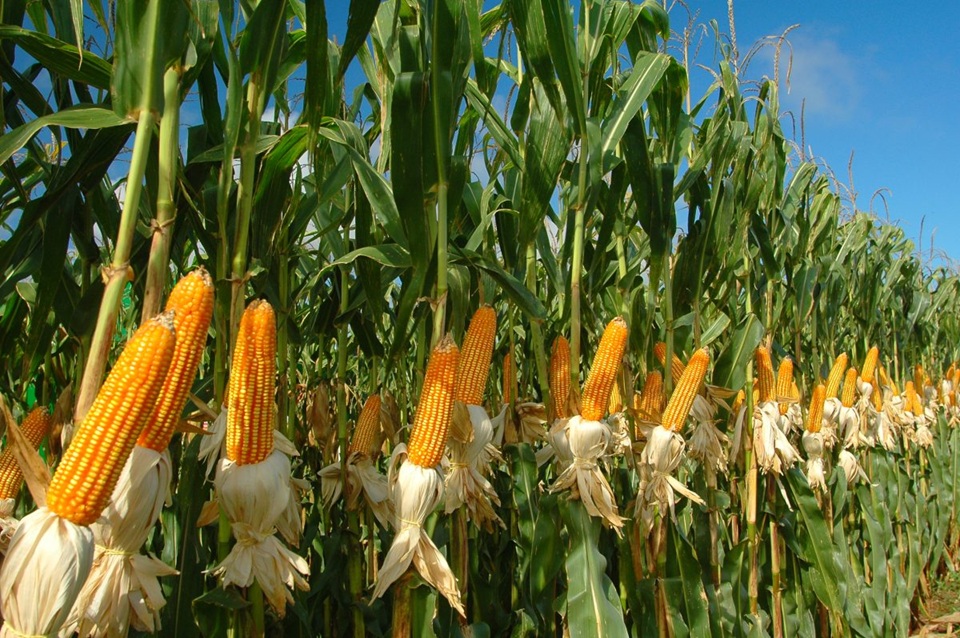
In second-crop maize systems, nitrogen largely determines final yield. Understanding its functions, synchronizing nutrient supply with crop demand, and reinforcing nutrition at critical stages such as V6 and VT are key to closing yield gaps. Strategies based on high-availability foliar nitrogen show tangible field-level results.
Second-crop maize has become firmly established in Argentina as a strategic option within production systems. Far from being a marginal crop, it now plays a key role in crop rotation diversification, margin stability, and yield capture in environments with greater water or thermal constraints. In this context, nitrogen (N) is the nutrient that most strongly conditions the final outcome, both because of its direct impact on crop growth and physiology and because of its strong interaction with environment and management.
Nitrogen as the engine of growth and yield
Maize shows a direct relationship between nitrogen availability and biomass production, active leaf area, and photosynthetic efficiency. Nitrogen is a structural component of chlorophyll, key enzymes, and plant proteins, so it defines the “engine size” of the crop and its ability to convert radiation and water into dry matter and grain. In second-crop maize, this role is intensified by the influence of the previous crop, the presence of residues with a high carbon-to-nitrogen ratio, and the greater climatic variability of the summer period.
The impact of nitrogen on maize yield is mainly explained through its effect on three key processes. First, the expansion and duration of leaf area, which determine how much radiation the crop intercepts and for how long. Second, the determination of kernel number, which takes place in the period before and around flowering. Finally, grain filling, which depends on the photosynthetic capacity of the crop during the reproductive stages. When nitrogen is limiting, all these processes are impaired and final yield is directly reduced.
Periods of highest nitrogen demand in maize
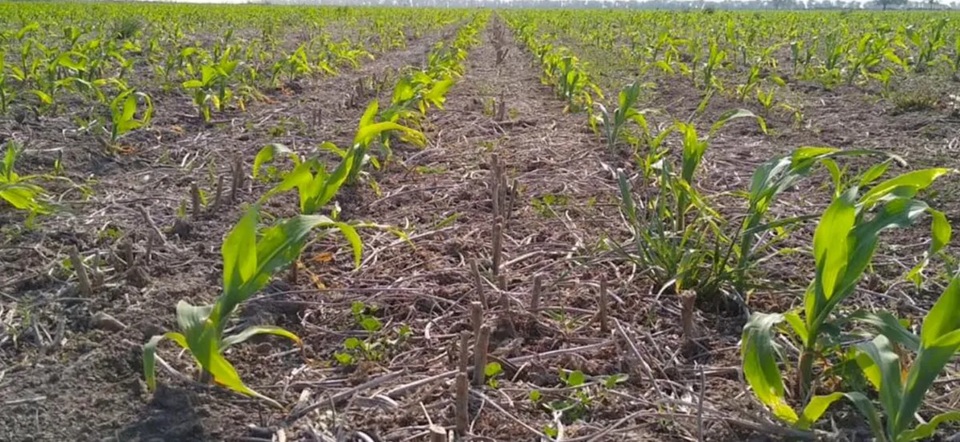
One of the central aspects of nitrogen management is understanding its temporal dynamics. Crop demand increases sharply from V5–V6 and peaks around flowering. A large proportion of total nitrogen uptake occurs over a relatively short period, coinciding with the phase of rapid vegetative growth. For this reason, fertilization programs that fail to synchronize nutrient supply with this critical window often show lower efficiency and wider yield gaps.
In second-crop maize systems, the need for nitrogen synchronization becomes even more critical. Soil N mineralization can be high in warm and wet seasons, but the risk of losses through leaching or volatilization also increases. At the same time, the decomposition of residues with a high carbon-to-nitrogen ratio can cause temporary immobilization, leading to early deficiencies even in soils with adequate initial nitrogen levels. Under this scenario, split applications and early-stage adjustments become key tools to sustain yield.
Complementary nitrogen applications at early stages, especially at V5–V6, make it possible to correct the crop’s nutritional status while it is still defining its structure and its ability to intercept radiation.

Foliar nitrogen as a fine-tuning tool
In this context, foliar nitrogen applications are positioned as a fine-tuning management tool. The foliar pathway allows nutrition to be reinforced at critical moments, particularly when there are transient limitations to root uptake. High-purity, high-availability nanoparticulate formulations are designed to maximize nutrient absorption and assimilation efficiency, reducing losses and enhancing crop response. Products such as MIST N fit into this logic, strengthening maize nutritional status at V6 and VT, when a large part of yield potential is defined.
Field results: validation of the nutritional strategy
The integration of these concepts is clearly supported by the results of a trial carried out during the 2023/24 season in Rojas, Buenos Aires province. The study showed highly significant yield differences among treatments, while variables such as emergence, final stand, and yield components did not show statistical differences, indicating that the observed gaps were explained by differences in crop nutritional efficiency.
The conventional management treatment, based on MAP at planting and soil-applied urea, achieved an average yield of 8,481 kg/ha, representing a 40% increase over the control. This result confirms the positive impact of adequate nitrogen and phosphorus supply in maize.
A particularly relevant result was obtained with the treatment combining B-Phos at planting with a foliar application of MIST N at VT. This scheme reached 8,465 kg/ha, a yield statistically equivalent to the conventional management, demonstrating that a strategy based on highly available phosphorus and foliar nitrogen applied at the moment of maximum demand can sustain high productivity levels with a more precise management approach.
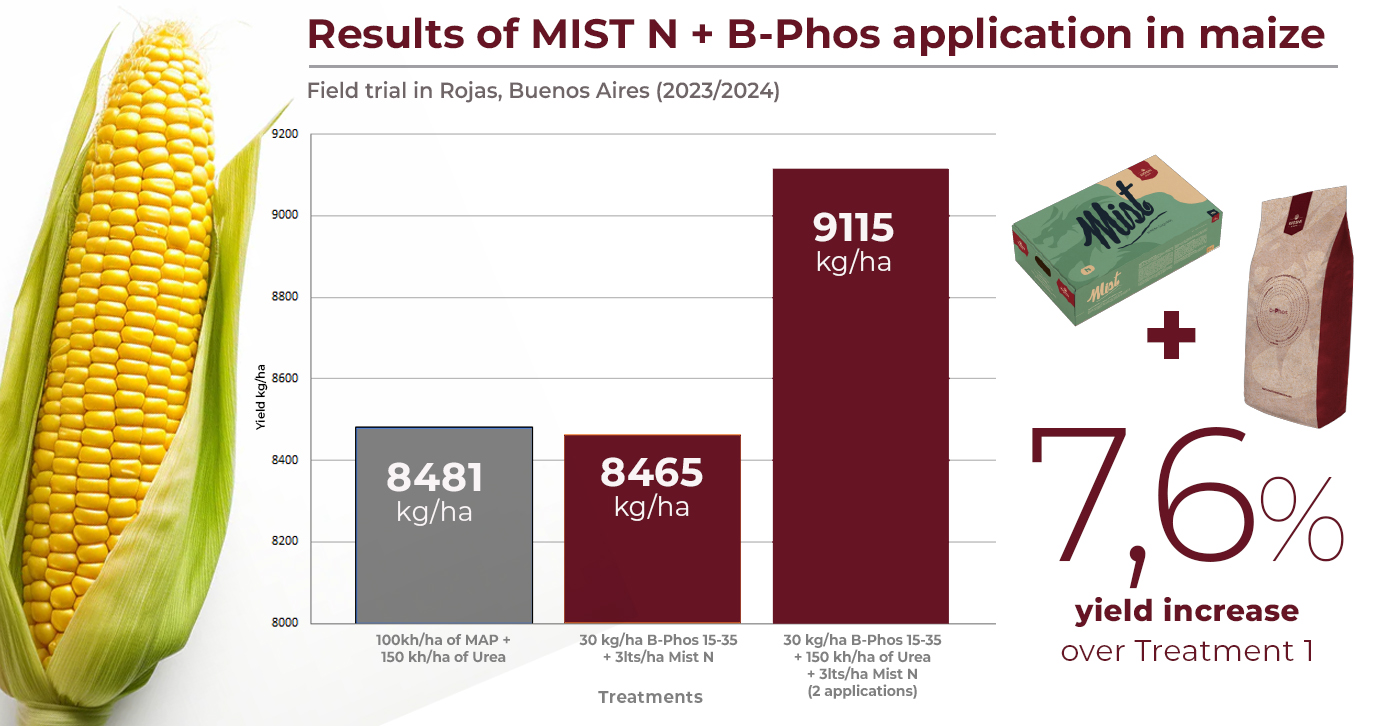
The highest yield of the trial was achieved with the treatment integrating B-Phos at planting, soil-applied urea, and two foliar applications of MIST N at V4 and VT. This management reached 9,115 kg/ha, exceeding the control by more than 50% and positioning itself as the most productive scheme, while also showing a better nutritional status during the crop’s critical period.
Conclusions: timely nitrogen to close yield gaps
Technical evidence and field results confirm that nitrogen management in second-crop maize should not focus solely on total dose, but rather on the right combination of source, timing, and application method. Integrating efficient phosphorus at planting with strategic nitrogen reinforcements, especially via foliar applications at V4 and VT, maximizes nutrient efficiency and translates that management into more final yield. In increasingly demanding production systems, precision nutrition is consolidating itself as one of the most powerful tools to close yield gaps and sustain the competitiveness of Argentine maize.