
From stress to growth: supporting soybean recovery
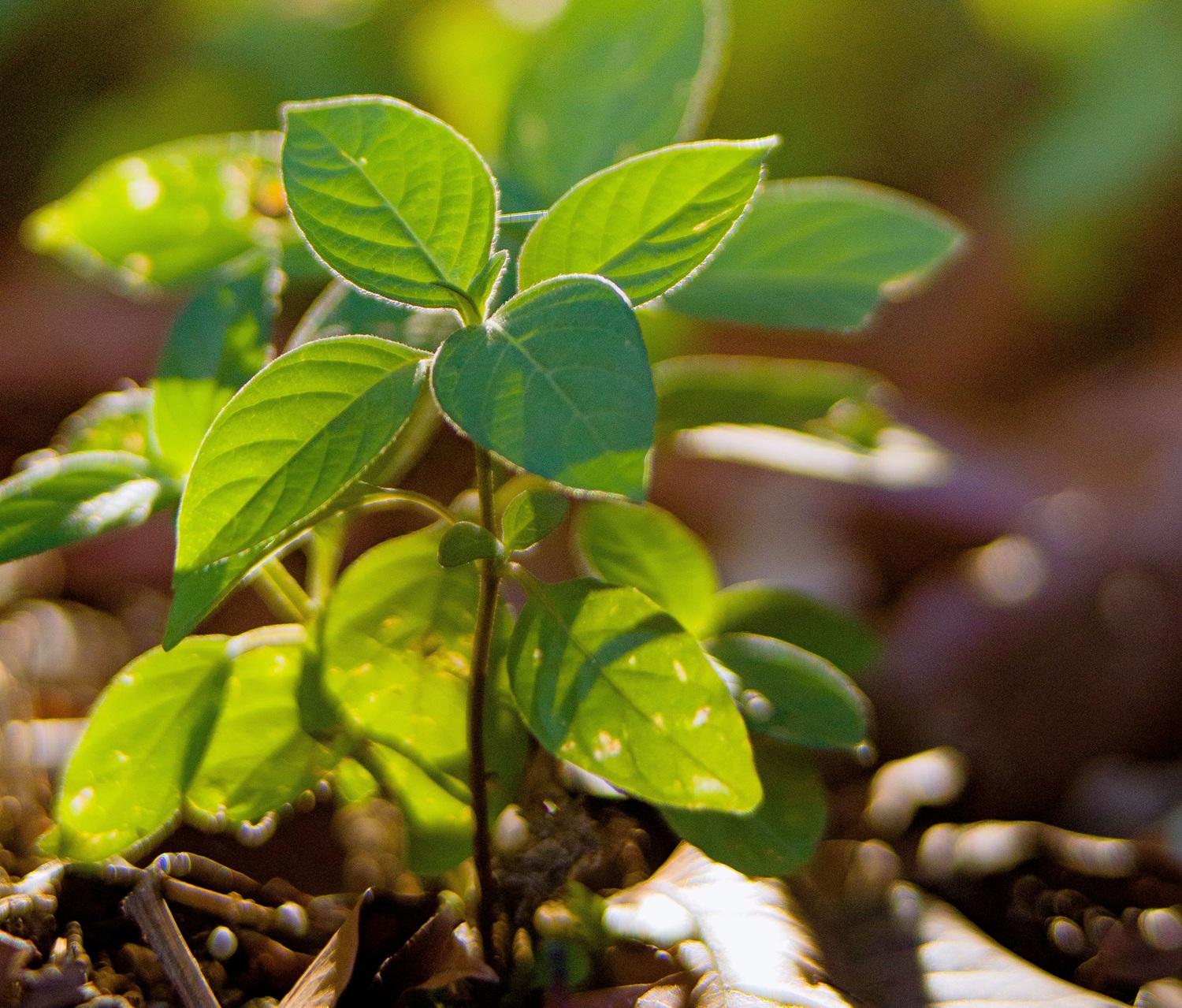
Herbicide injury can slow early soybean growth. In a greenhouse trial, HOGO-treated plants exposed to sulfentrazone produced more biomass and leaf area than plants that received the herbicide alone. HOGO’s formulation combines amino acids, peptides, and other bioactive compounds that support the crop’s response to stress.
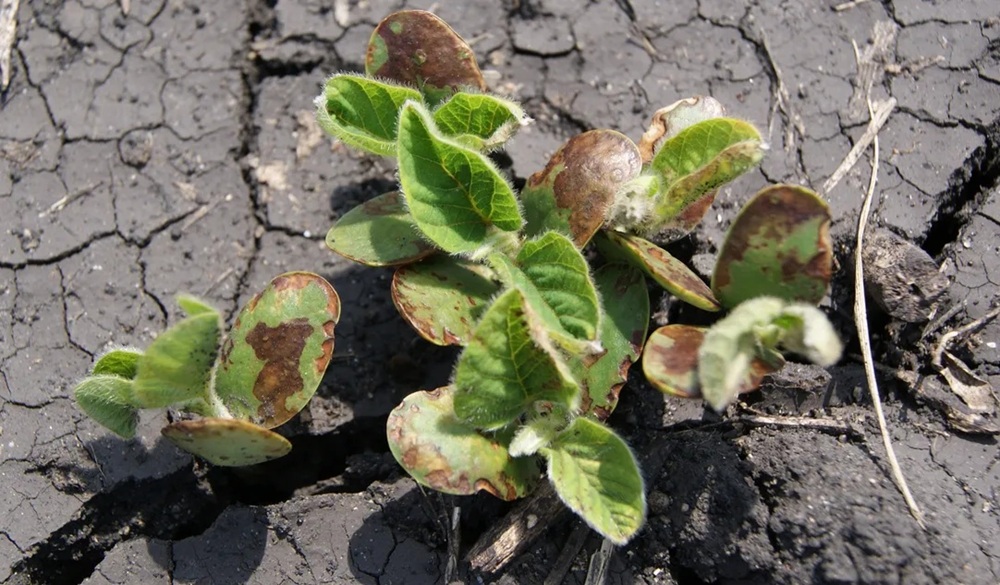
Soybean seedlings emerge, but something in the field catches the eye: the cotyledons are spotted, leaf margins begin to show necrosis, and plant growth appears to slow. The first step is to determine what happened. When the cause is herbicide injury, the crop’s potential to recover depends on the severity of the damage, the growth stage, and the conditions it encounters in the days that follow.
Biostimulants are among the tools that can help support recovery. A greenhouse trial evaluated HOGO on soybean plants treated with sulfentrazone pre-emergence. The results showed significant increases in biomass and leaf area in treatments that combined the herbicide with the biostimulant. To understand what this response means, it helps to first look at how sulfentrazone acts on the plant.
When weed control affects the crop
Sulfentrazone is a residual herbicide applied to the soil to control weeds during the early stages of crop development. In pre-emergence applications, moisture helps make the product available in the soil solution, where it can be taken up by germinating plants.
Sulfentrazone acts by inhibiting protoporphyrinogen oxidase, an enzyme known as PPO. This inhibition triggers oxidative processes that damage cell membranes and can lead to necrosis and death of susceptible tissue. In soybean, injury from pre-emergence PPO inhibitors can include necrosis on the cotyledons and leaf margins. If the herbicide contacts the hypocotyl during emergence, it can also affect plant establishment.
Crop response depends on more than the herbicide itself. Soil pH, texture, and organic matter content affect how much sulfentrazone remains available in the soil. Moisture and application timing relative to crop emergence also play a role. Application planning should therefore account for field conditions and the use directions for each product formulation.
A recent study in Argentina found that pre-emergence treatments containing sulfentrazone caused mild chlorosis and reduced biomass through the V4 stage. The authors noted that soil conditions, moisture, and application timing close to crop emergence may have influenced the response. Herbicide injury can vary in severity and does not always have the same effect on subsequent crop development.
Recovery begins in the tissue that remains viable
After injury, the plant must maintain its defenses and repair affected tissue while continuing to grow. If the growing point remains viable, the plant can produce new leaves and resume development. Recovery requires resources: the crop must sustain its metabolism at a time when stress may have limited growth.
When a plant is under stress, it needs energy to protect itself and repair damaged tissue. Amino acids and peptides can support this process by contributing to nitrogen use and defense mechanisms that help reduce the impact of stress. In soybean, amino acid applications have been shown to alter some of these defense responses, although the outcome varies with the product and growing conditions.
Each compound has a different role. Some help the plant manage water, while others participate in processes associated with growth and the formation of new tissue. Peptides may also provide amino acids or act as signals. Together, these components can support crop recovery and continued development.

A formulation designed to support crops under stress
Building on this approach, Kioshi Stone developed HOGO, a liquid biostimulant produced using UnlockerBioEssence technology. Selected microorganisms—including fungi, yeasts, and bacteria—transform plant-based substrates through microbial hydrolysis. The product contains amino acids, peptides, polyphenols, isoflavones, phytosterols, and other phenolic compounds.
Its amino acids include glutamic acid and glutamine (23%), alanine (10.3%), arginine (7.9%), phenylalanine (7.2%), proline (4.6%), and tryptophan (2.1%), among others. The formulation is designed to promote root and vegetative growth, improve nutrient uptake, and contribute to greater tolerance to stress factors such as drought, frost, high temperatures, salinity, and crop protection products. It also incorporates nanoparticle technology intended to improve bioavailability.
In a crop affected by herbicide injury, the aim is to support the function of tissue that remains viable and encourage continued growth. Biostimulation can be incorporated into crop management as a supporting tool, alongside damage assessment and evaluation of field conditions.
What the soybean trial showed
The greenhouse trial included five treatments and seven replications. Sulfentrazone was applied to the growing medium pre-emergence at rates of 0.8 and 1.2 L/ha. HOGO was applied foliarly at 0.5 L/ha, ten days after crop emergence, at V1. Plants were harvested 21 days later to measure aboveground fresh biomass, aboveground dry biomass, and leaf area.
The clearest response was in biomass. Treatments with sulfentrazone plus HOGO produced 8.59 and 9.19 g of fresh biomass, compared with 3.78 and 3.96 g in the corresponding treatments that received sulfentrazone alone. For dry biomass, the combination treatments recorded 1.69 and 1.87 g, while the herbicide-only treatments reached 0.83 and 0.91 g. Differences between the combination treatments and sulfentrazone alone were statistically significant.
.jpg)
Dry biomass in the HOGO treatments was 40.8% higher than the untreated control at the 0.8 L/ha sulfentrazone rate and 55.8% higher at the 1.2 L/ha rate. Leaf area also increased: the treatment with 0.8 L/ha sulfentrazone plus HOGO reached 309.16 cm², 43.7% above the control, a statistically significant difference. Overall, the statistical analysis detected treatment effects for all three variables (p < 0.0001).
.jpg)
Under the controlled conditions of this trial, HOGO application was associated with greater biomass and leaf area in soybean plants treated with sulfentrazone. This response supports HOGO’s potential to help soybean recover vegetatively from the stress evaluated.
Biomass and yield
Biomass is the dry matter produced by the soybean crop over its growing cycle. When the crop develops more leaves and maintains an active canopy, it can intercept more radiation and produce the sugars that support pod formation and seed filling. In soybean, biomass accumulated between R3 and R6 is associated with the number of seeds set. Final yield also depends on the harvest index: the proportion of total biomass allocated to the seeds. Water and nutrient availability, as well as the absence of stress during reproductive development, therefore influence how much of the crop’s growth is converted into yield.